
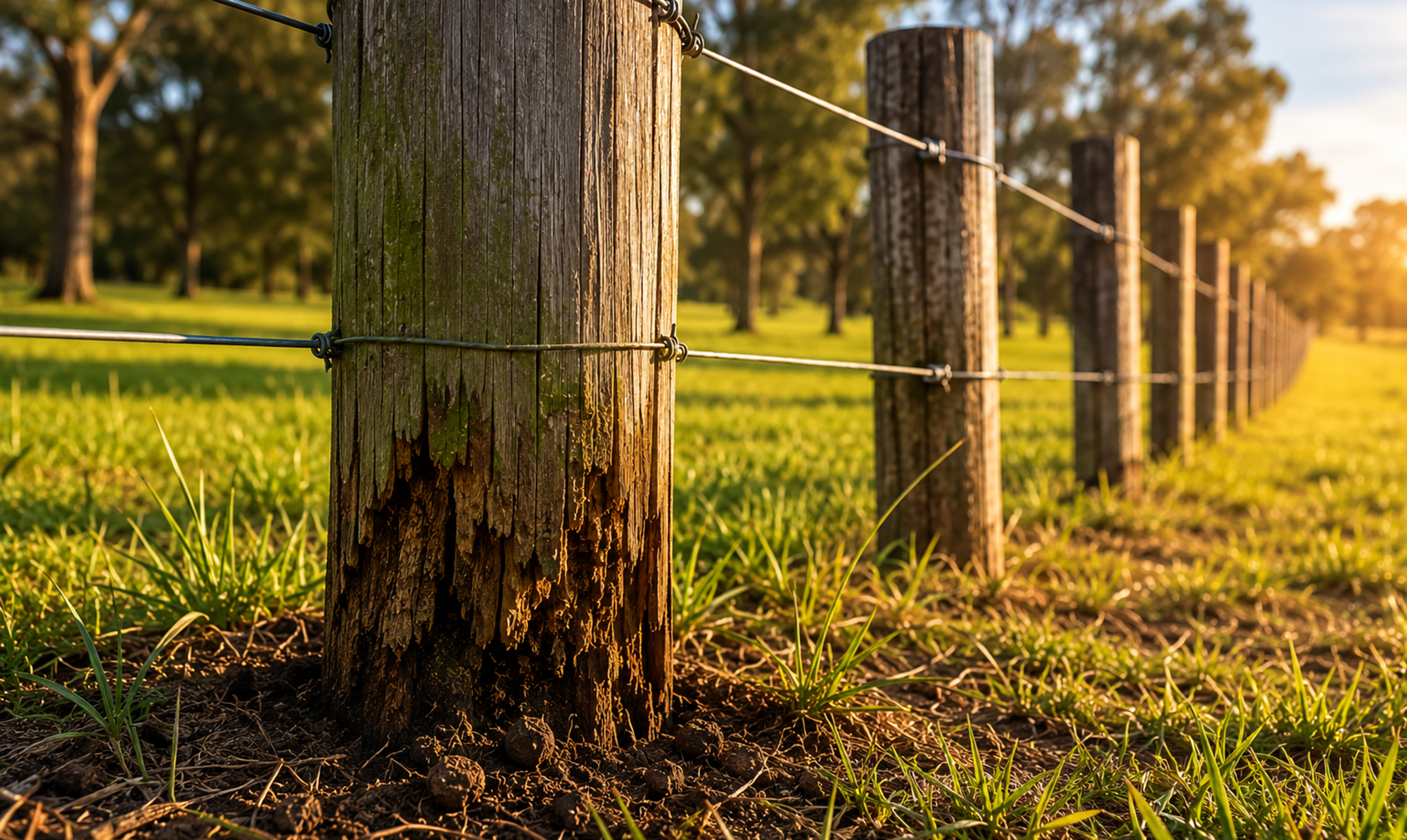
Most timber poles fail at ground level. This zone experiences constant moisture, fungal activity and oxygen exposure, creating ideal conditions for timber decay. Polesaver Rods PS10 provide targeted protection where timber poles are most vulnerable, helping extend service life and reduce replacement costs.
Why Timber Poles Rot at Ground Level
The ground-line zone is the highest-risk area for decay.
This area experiences:
- Constant moisture fluctuations
- Oxygen availability
- Fungal growth
- Soil-borne organisms
This is why most failures occur within 150mm above or below ground level.
Types of Poles That Commonly Fail

Utility Poles
Electrical and communication infrastructure.
Fence Posts
Rural and residential fencing.
Signage Poles
Commercial and municipal assets.
Agricultural Infrastructure
Farm fencing and support structures.
Warning Signs of Pole Rot
| Symptom | Risk Level |
|---|
| Surface cracking | Moderate |
| Soft timber | High |
| Ground-line decay | High |
| Leaning pole | Critical |
| Hollow sounding timber | Critical |

Why Pole Replacement Is Expensive
Replacing a pole often involves:
- Excavation
- Labour
- Equipment hire
- Asset downtime
- Disposal costs
Extending pole life can significantly reduce long-term maintenance budgets.
How Polesaver Rods PS10 Work
Polesaver Rods are installed directly into vulnerable timber zones.
Benefits include:
- Targeted protection
- Suitable for utility poles
- Suitable for fence posts
- Designed for commercial timber maintenance
- Helps extend service life
Pole Maintenance Program
Inspect
Perform annual inspections.
Identify
Locate decay-prone areas.
Treat
Install Polesaver Rods where required.
Monitor
Track asset condition over time.
Our solid rods of concentrated elemental Boron and Fluoride manufactured as slow release wood preservatives for the control of fungal decay in the heartwood of poles and other structural timber.

Frequently Asked Questions
Where do timber poles usually rot?
Most failures occur at ground-line level.
Are Polesaver Rods suitable for utility poles?
Yes. They are commonly used in timber asset maintenance programs.
Can they be used on fence posts?
Absolutely.
Why treat rather than replace?
Preventative maintenance is typically far more cost-effective.

Supporting Blogs
- Post-Flood Timber Care
- How to Protect Timber Window Frames from Rot
- Commercial Timber Maintenance for Poles, Boardwalks, Jetties & Bridges
- APVMA Approved
Share: